Drunken Herbal Prawns
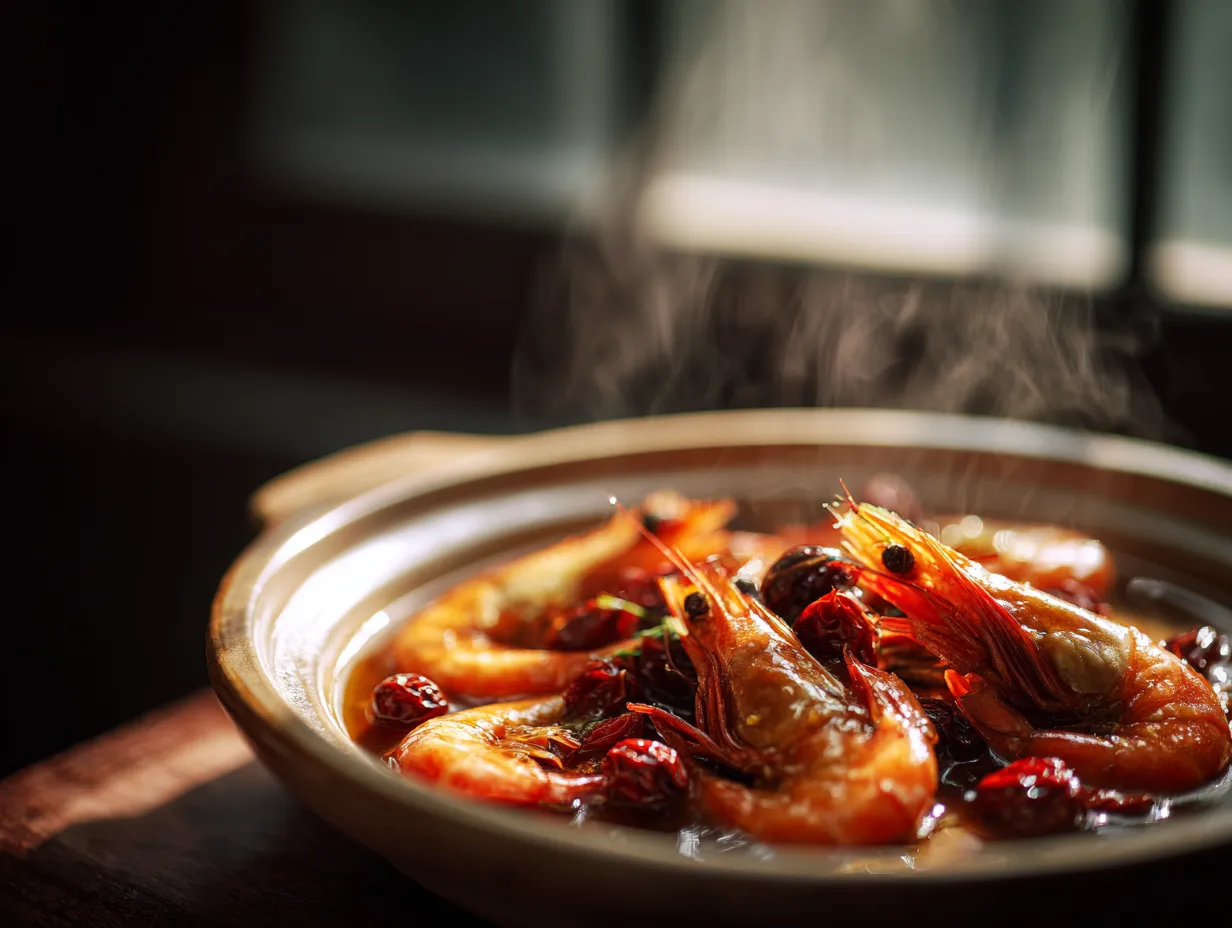
A Singapore-style Drunken Herbal Prawns recipe — succulent prawns braised in Shaoxing wine and warming Chinese herbs for a fragrant, shareable zi char-style main.
About this dish
Drunken Herbal Prawns is a comforting Singapore-style seafood dish that marries plump prawns with the sweet warmth of Shaoxing wine and classic Chinese medicinal aromatics. It sits nicely between hawker-centre nostalgia and home-cooked zi char: think neighbourhood family dinners in heartland HDB flats or a special weekend spread for friends from Tiong Bahru to East Coast.
This version riffs on the classic 'drunken' technique — quick-poké braising in a hot, fragrant broth of Chinese herbs (dang gui, goji berries, red dates), ginger and light soy — so the prawns stay bouncy and carry a silky, slightly boozy sauce. The flavour profile is bright ginger and garlic up front, gentle herbal sweetness from the roots and berries, and a background savoury note from Shaoxing and oyster sauce. It’s ideal for sharing family-style with steamed rice or pandan coconut rice.
Serve it for a weekend family meal, a casual potluck, or as part of a reunion dinner where seafood takes centre stage. At home you can scale the spice, tweak the herbs (available at Cold Storage or local Chinese medicine shops), and get that restaurant-ish wok aroma by using a hot wok and quick, high-heat finishes just like the zi char stalls in the CBD or your neighbourhood hawker centre.
Ingredients
- 600 g prawns (head-on or peeled as preferred; tiger prawns or king prawns work well)
- 1 tbsp light soy sauce
- 1 tbsp oyster sauce
- 120 ml Shaoxing wine (or dry sherry as substitute)
- 400 ml chicken stock (or prawn shell stock for deeper flavour)
- 2 slices (2 cm each) fresh ginger, cut into matchsticks
- 3 cloves garlic, lightly crushed
- 6 red dates (jujubes), halved
- 1 tbsp goji berries (wolfberries), rinsed
- 1 small piece dang gui / angelica root (about 10 g) or 1 tsp dried Chinese herbal mix
- 1 tsp sugar (palm sugar or caster sugar)
- 2 tbsp cooking oil (peanut or vegetable)
- 1 tsp sesame oil
- 2 spring onions, julienned (white and green separated)
- 1 tbsp cornflour mixed with 2 tbsp water (optional, to thicken)
- Salt and white pepper to taste
- 2–4 bird's eye chillies / chilli padi, sliced (optional, for heat)
- Fresh coriander or Chinese celery leaves for garnish
- Steamed jasmine rice or pandan rice, to serve
Step-by-Step Method
- Prepare the prawns: rinse and pat dry. If using whole prawns, you can leave heads on for more flavour; optionally cut shallow slits along the back and remove the vein. Toss prawns with 1 tbsp Shaoxing wine and 1/2 tsp light soy; set aside to marinate for 10–15 minutes.
- Prepare the herbal broth: in a bowl combine chicken stock, remaining Shaoxing wine, goji berries, halved red dates and dang gui. Let the herbs soak while you heat the wok so flavours bloom.
- Heat a wok over high heat until smoking slightly for wok hei. Add 2 tbsp oil and swirl to coat. Sear prawns in a single layer for 30–45 seconds per side until just pink and starting to curl (do not overcook). Remove prawns to a plate and set aside.
- Lower heat to medium. Add a touch more oil if needed, then fry ginger matchsticks and crushed garlic until aromatic (20–30 seconds) — careful not to burn them.
- Pour in the prepared herbal stock and bring to a simmer on medium-high. Taste the broth and season with light soy, oyster sauce and sugar; adjust balance to be slightly savoury-sweet with a whisper of wine.
- Return the prawns to the wok and simmer gently for 2–3 minutes so they absorb the herbal aroma. If you prefer a slightly thicker sauce, stir in the cornflour slurry and simmer for another minute until glossy.
- Turn off heat and finish with sesame oil, most of the white parts of spring onions (reserve green tops for garnish) and a grind of white pepper. If using chillies, add them now to keep the heat bright.
- Transfer to a serving bowl, garnish with green spring onion tops and coriander or Chinese celery. Serve immediately with steamed jasmine rice or pandan coconut rice for a comforting, shareable meal.
- Taste and adjust: like a zi char stall, taste the sauce and add a dash more light soy or sugar if the broth needs brightening; you can also splash extra Shaoxing at the end for more boozy aroma (avoid if serving to children or pregnant guests).
Tips & Serving Ideas
- Buy fresh prawns at the wet market for best texture; frozen prawns from NTUC FairPrice, Cold Storage or Sheng Siong work too—thaw fully and pat dry before cooking.
- If you can't find dang gui, use a ready-made Chinese herbal soup mix or omit and rely on goji/red dates for a milder herbal note.
- To get wok hei, preheat your wok until very hot, cook in small batches and avoid overcrowding. Quick, high heat searing locks in juices and gives better flavour like a zi char stall.
- Adjust alcohol: use Shaoxing wine for authenticity; substitute equal parts mirin + a splash of dry sherry if needed. For kids or pregnant guests, reduce wine and add more stock and fragrant ginger.
- Make-ahead: prepare and chill the herbal broth a day ahead. Reheat and add prawns at the end to avoid overcooking; leftovers keep for 1–2 days in the fridge—reheat gently.
- Control spice by adding sliced chilli padi on the side so diners can customise heat, a common practice at hawker stalls in Singapore.
You might also like
More recipes to save for later.